The agricultural data infrastructure that makes agricultural AI actually work
Agricultural data infrastructure almost never makes the headlines. Everyone talks about artificial intelligence, sensors and predictive models, and hardly anyone talks about the agronomic database that makes any of those technologies actually work on the ground rather than only in a demo. A real case recently presented by VisualNACert at a scientific conference — calculating and verifying a carbon balance in Mediterranean citrus growing — is a good way to look at this with figures in front of you instead of promises.
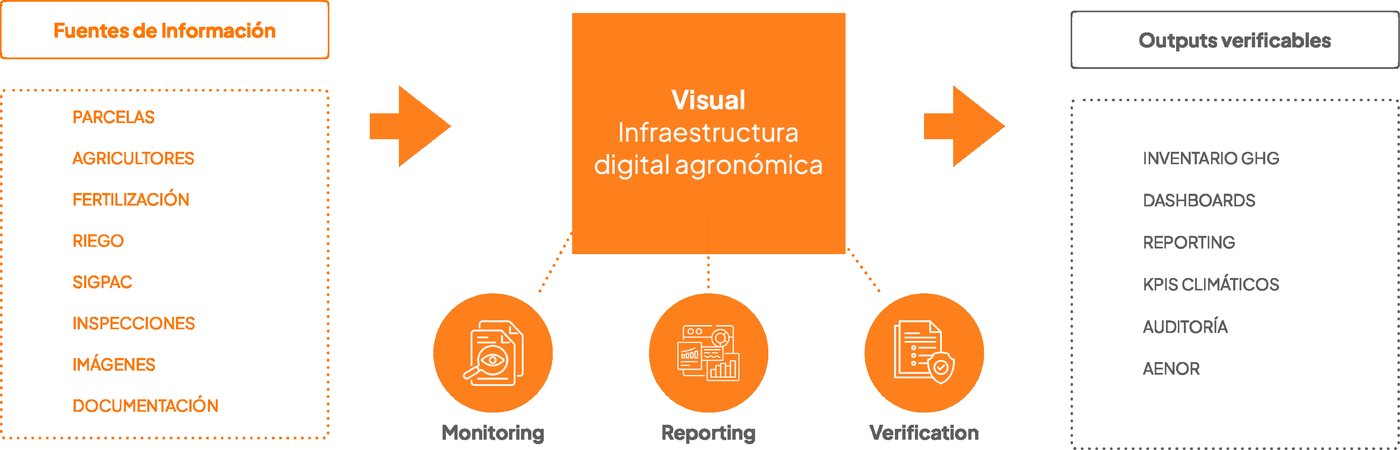
The agrifood industry is full of eye-catching artificial intelligence demonstrations built on sample data rather than real farm data. The difference only becomes apparent when that technology has to operate through a real season, with the inconsistencies, gaps and quirks that any genuine farm has — a world away from the controlled environment of a sales demo.
Here, the order of operations does change the result
It is common for an agrifood business to want to jump straight to artificial intelligence: an assistant that answers questions, a model that predicts harvests, a system that detects pests. The problem is that none of those capabilities is any better than the data they are trained on and operate over. Without an agricultural data infrastructure — geolocated plots, agronomic history, technical documentation, full traceability — agricultural AI has nothing to reason about, and ends up producing generic answers that could apply to any farm anywhere, which delivers no real value at all.
A real case: what it takes to calculate and verify a carbon balance
At a recent scientific conference, VisualNACert presented a citrus case assessed over twelve consecutive seasons, in which the cropping system maintained a net positive carbon balance throughout the period, externally verified against ISO 14064-3 by AENOR. That result did not come from a formula applied at the last minute: it came from years of real agronomic field data — plots, irrigation, fertilisation, pruning, direct surveys of growers — already structured and traceable before anyone proposed calculating anything.
One agronomic dataset, two different uses
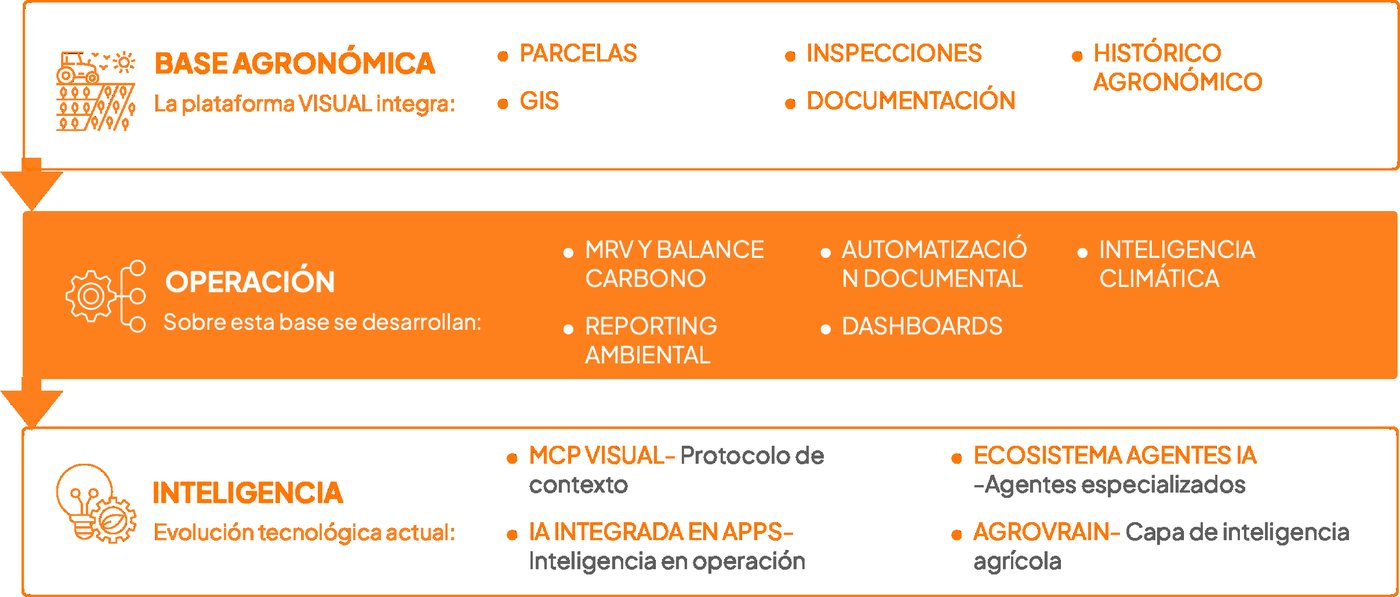
Here is the part that almost never gets explained: the same database that allows a carbon balance to be calculated and audited is, with small adjustments, the one that supports an artificial intelligence layer such as AgroVRAIN. Plot geolocation, treatment history, technical documentation, season results — that same data, properly structured once, serves to report sustainability, to make irrigation or fertilisation decisions, and to train or feed an AI system that interprets what is happening on a farm. These are not three separate projects. It is the same infrastructure working in several directions.
Why external verification changes the rules
A carbon balance calculated with your own data but without an external audit is, at bottom, an exercise in trust: you have to believe the calculation is correct. Submitting it to a recognised standard such as ISO 14064 and to independent verification such as AENOR's moves that trust from rhetoric to evidence. Exactly the same should apply to agricultural AI: a recommendation from an artificial intelligence system is worth little if nobody can explain which data produced it or check whether that data is real. Opacity is not a minor technical detail. It is what separates a reliable tool from a black box.
This demand for verification is no oddity of the agrifood industry: it is the same logic already applied in financial auditing, in quality certification and in food traceability. What is new is applying it to agricultural artificial intelligence with the same rigour, instead of accepting that a system merely appearing to work is enough, with no way to explain why it reaches a particular conclusion or which data supports it.
From the agronomic base to the intelligence layer
At VisualNACert we understand this progression as three steps built one on top of the other: first a solid agronomic base — plots, inspections, documentation, history; then an operating layer that turns that data into verifiable balances, reports and dashboards; and only then an intelligence layer, such as AgroVRAIN, able to interpret all of that information and turn it into useful decisions. Skipping the first step to reach the third sooner is precisely what produces most of the agricultural AI promises that do not survive first contact with a real farm.
What this means if you are evaluating agricultural AI suppliers
For a cooperative, a processor or a farm weighing up artificial intelligence, the most useful question is not what the model can do. It is which data it operates on, and whether that data — and its results — can be verified independently. A supplier who can show years of structured, traceable and, where appropriate, externally audited agronomic data offers a guarantee that no product demonstration can replace: that what is promised has already held up against real data before, and not only in a slide deck.
In practice this translates into very concrete questions before signing any agricultural AI contract. How many years of first-party data, rather than third-party or generic data, has the system been trained or calibrated on? Can the supplier show a case, even a single one, where that same kind of infrastructure has been through a recognised external verification? And above all: what happens the day your own farm's data starts feeding the system — does it stay structured and available to you, or does it end up locked inside a tool you can neither audit nor take elsewhere?
Sources
- CIHEAM Zaragoza — Three days sharing knowledge and experience on the future of fruit and citrus growing
- Mercedes Iborra's own presentation (VisualNACert) at the XIII National Conference on Fruit Growing and III on Citrus Growing, SECH, Zaragoza, June 2026. The figures used are those the talk itself presented as public conclusions; see the newsroom note for a summary of the event.
If you want to know how we build that agronomic data infrastructure before applying any artificial intelligence layer, let us talk.
Book a demo→