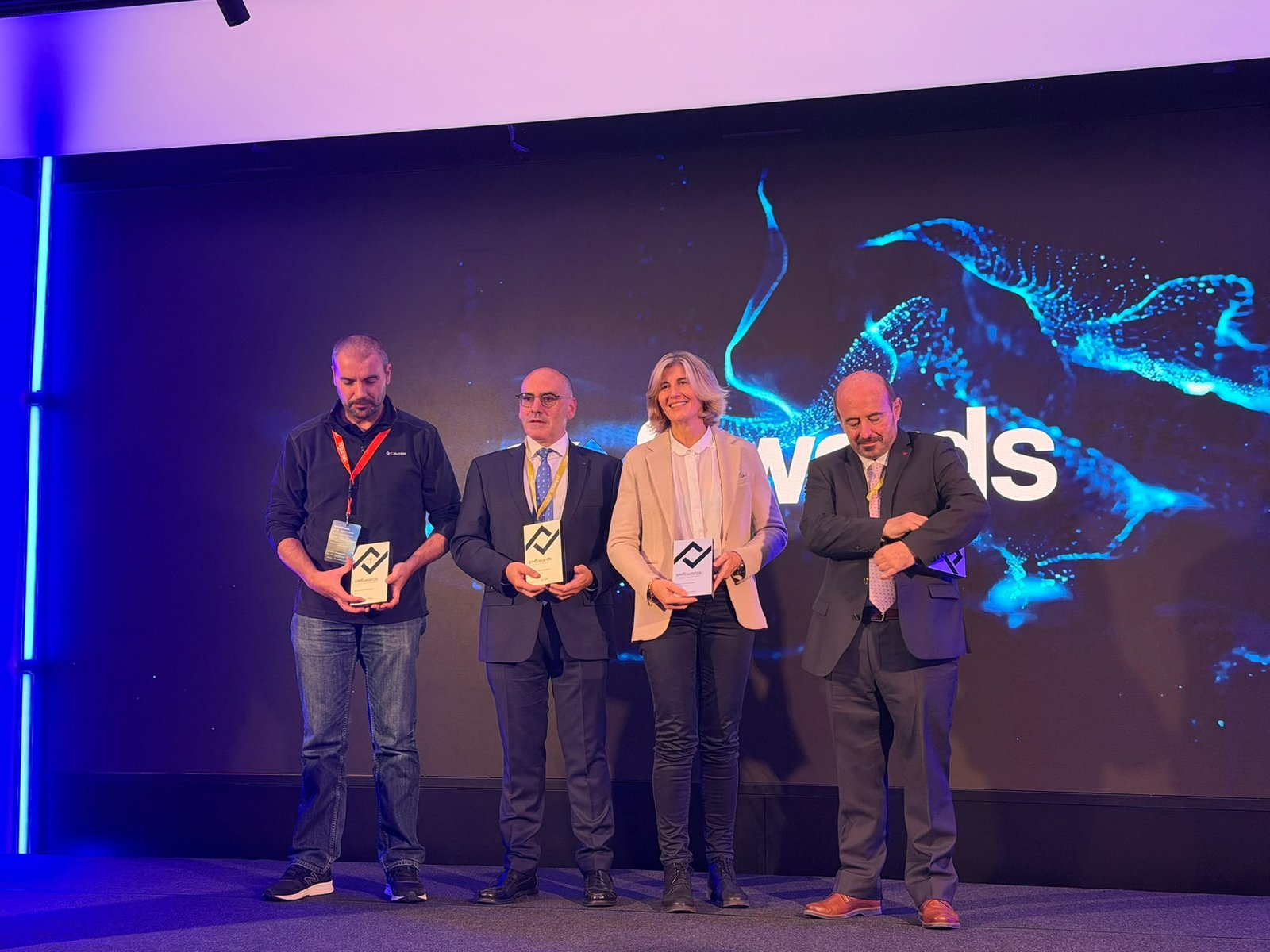
Agrovrain, independently evaluated in agrifoodTEF
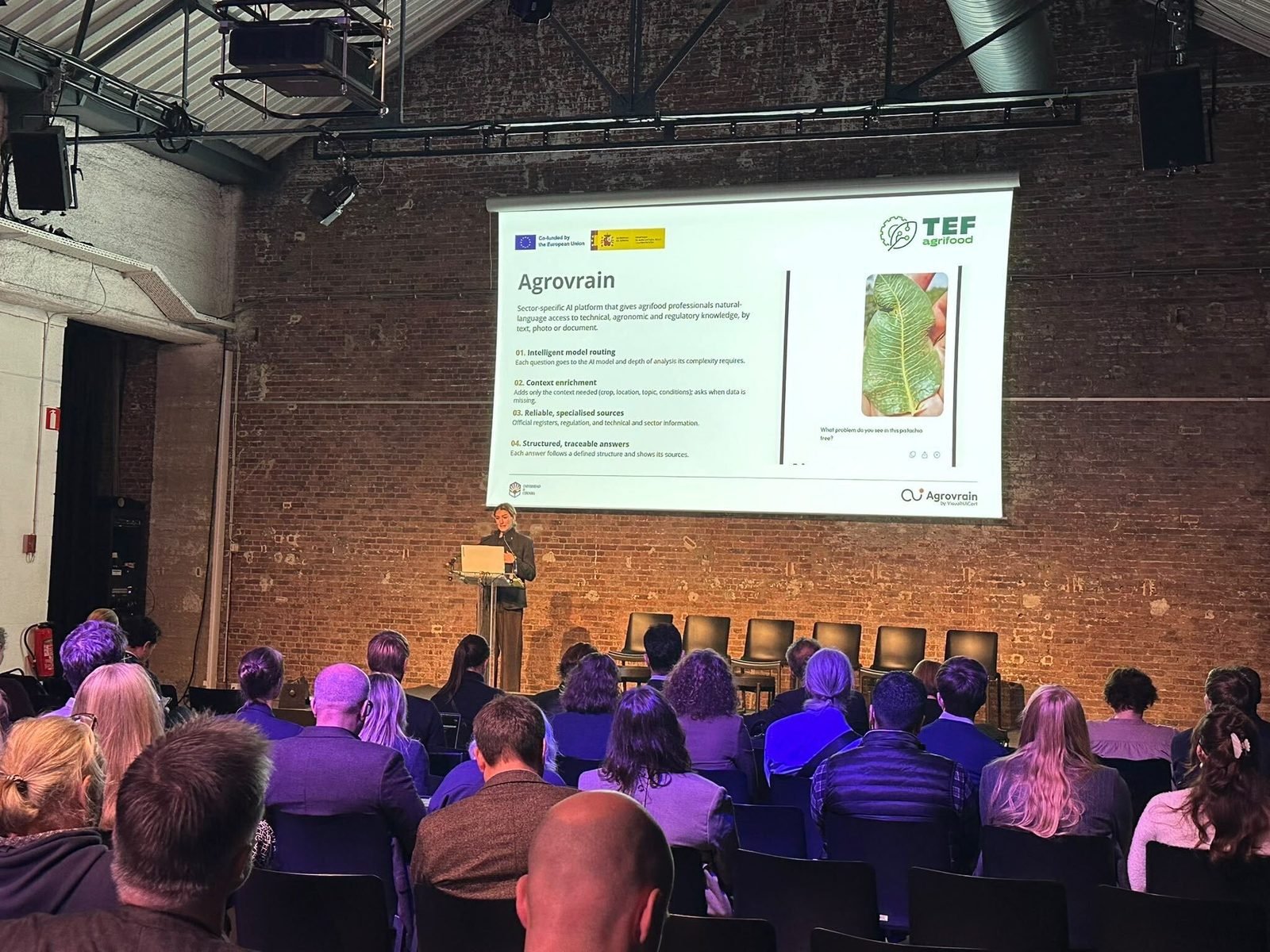
Agrovrain, the foundation of Agrónomo 24/7, has been independently evaluated by the agrifoodTEF team at the University of Córdoba, part of the European network of testing facilities for the agrifood sector. Carla Ballester, CTO at VisualNACert, presented the collaboration on 18 November at xTEF in Brussels.
What was evaluated
Agrovrain is the foundation of Agrónomo 24/7, the voice assistant in Visual Core. It is the engine that answers technical, agronomic and regulatory questions from sector professionals, by text, photo or document. The evaluation focused on four aspects of how it works:
- Every question, sized to fit. It goes to the AI model and depth of analysis its complexity requires.
- The right context. It adds only the context needed (crop, location, topic, conditions) and asks when data is missing.
- Specialised sources. It draws on official registers, regulation, and technical and sector information.
- Structured, traceable answers. Each answer follows a defined structure and shows its sources, so the person can review them.
Who evaluated it
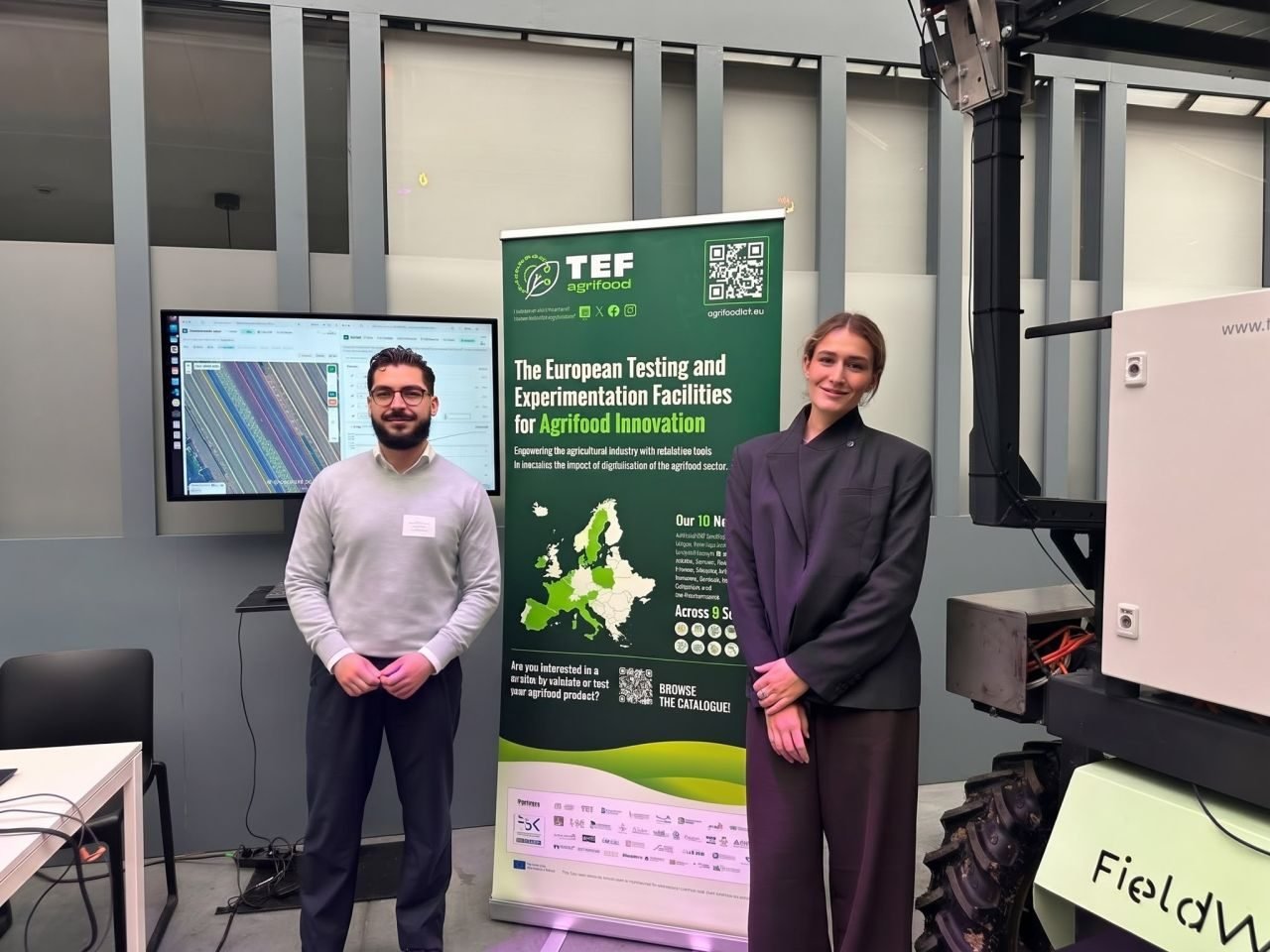
agrifoodTEF is the European network of testing and experimentation facilities for agrifood innovation. It is co-funded by the European Union's Digital Europe Programme and, for the Spanish node, by the Ministry of Agriculture, Fisheries and Food. Its role is to test and validate technology under real conditions, independently of whoever develops it.
The evaluation of Agrovrain was carried out by the agrifoodTEF team at the University of Córdoba, which tested it as a user would, with its own working method.
How the evaluation worked
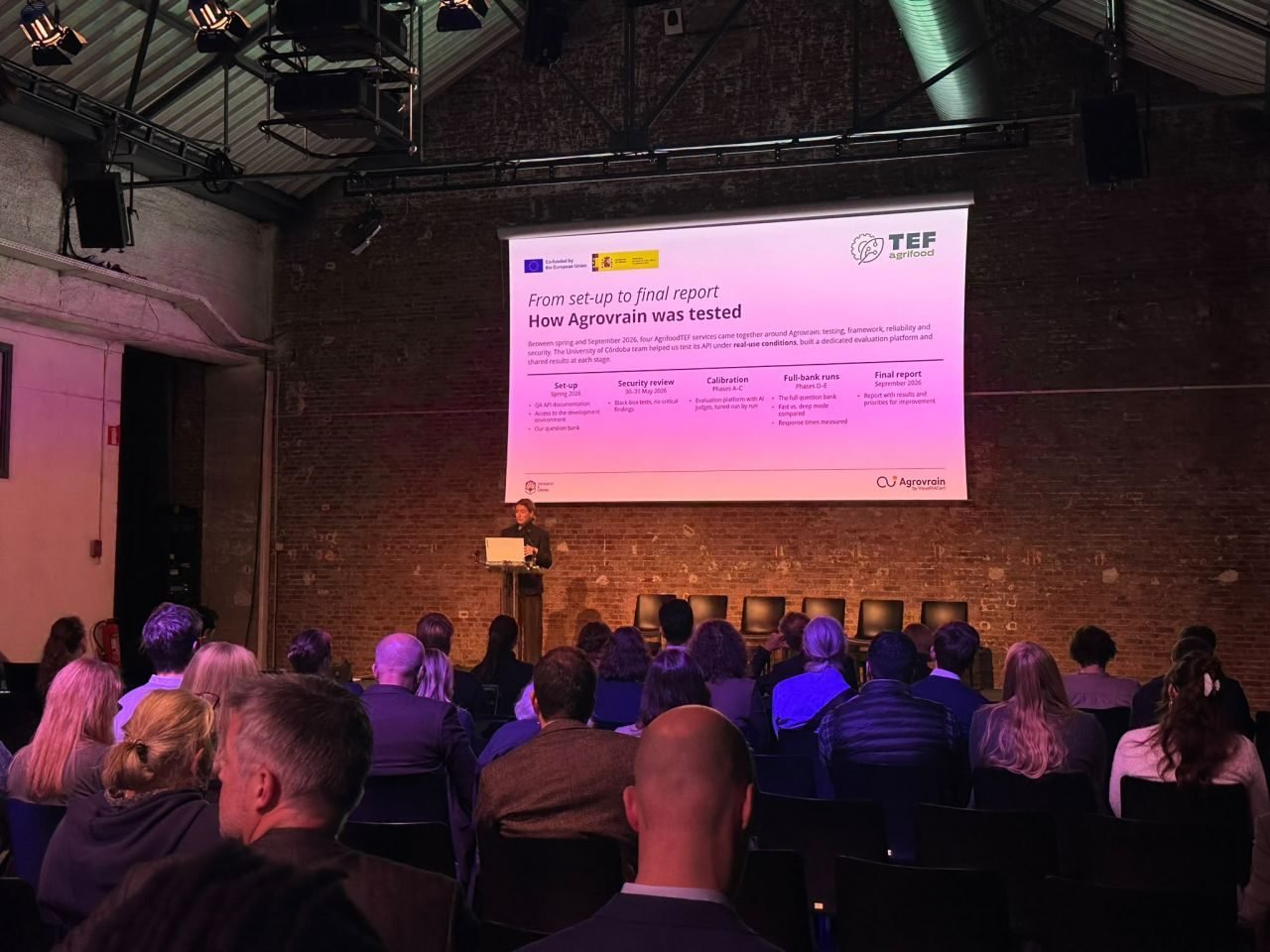
Between spring and September 2026, four agrifoodTEF services came together around Agrovrain. The University of Córdoba team worked with VisualNACert's developers on the Agrovrain API, tested it under real-use conditions and shared results at every phase. This is what was checked:
- Automated testing. REST API under real-use conditions, authentication, streaming responses, and conversations with guided expert flows.
- Assistant framework. Architecture and knowledge sources, response times, concurrent queries and overall system efficiency.
- Reliability and hallucination detection. Accuracy and consistency of the answers, question batteries by user profile, and evaluators for fidelity and hallucinations.
- Security and data exposure. Data flows and access control, exposure of internal information, vulnerabilities and misconfigurations.
And this was the path, from set-up to final report:
- Set-up (spring). API documentation, access to the development environment and our own question bank.
- Security review (30 and 31 May). Black-box tests on the API.
- Calibration (phases A to C). An evaluation platform with AI judges, tuned on each run.
- Full-bank runs (phases D and E). Fast mode compared with deep mode, with response times measured.
- Final report (September). A report with the results of the evaluation.
What it gave VisualNACert
- An expert outside eye. A team outside our company tested Agrovrain as a real user would.
- A method. A question bank, AI judges and evaluation profiles we did not have.
- Feedback at every stage. Results shared phase by phase, so we could improve along the way.
- Independent evidence. An objective basis for anyone who needs to trust the answers they get.
xTEF, in Brussels
On 18 November, xTEF brought together the four European testing and experimentation facilities at The EGG in Brussels: agrifoodTEF, AI-MATTERS, TEF-Health and CitCom.ai. Carla Ballester presented the Agrovrain evaluation, accompanied by José Francisco Díaz Lao from agrifoodTEF UCO.
"Having an outside team test Agrovrain as a real user would has given us a method and a perspective we could not have from the inside. It helps us improve, and it helps anyone who works with our answers to trust them." Carla Ballester, CTO at VisualNACert
If you want to see how Agrónomo 24/7 works or learn more about the scope of the evaluation, get in touch and we will go through it with you.
The evaluation was carried out by agrifoodTEF between spring and September 2026 and is an independent technical validation of the capabilities tested. This project has received co-funding from the Digital Europe Programme of the European Union under grant agreement No. 101100622 and from the Directorate General for Rural Development, Innovation and Agri-food Training, corresponding to own funds from the Spanish Ministry of Agriculture, Fisheries and Food.

Shall we talk about your case?
Tell us which crop you manage and we will show you how it applies on your farm, using data from your own plots.
Book a demo→