Nadorcott's carbon balance: the work behind the number

Looking after the soil, managing water well and being more efficient is everyday work that almost never gets seen. At Nadorcott, twelve seasons of that work have become a figure: a favourable carbon balance of more than 1.33 million tonnes of CO₂ equivalent, according to the Club de Variedades Vegetales Protegidas, verified by AENOR. Here is what lies behind it.
What the balance measures and what it does not
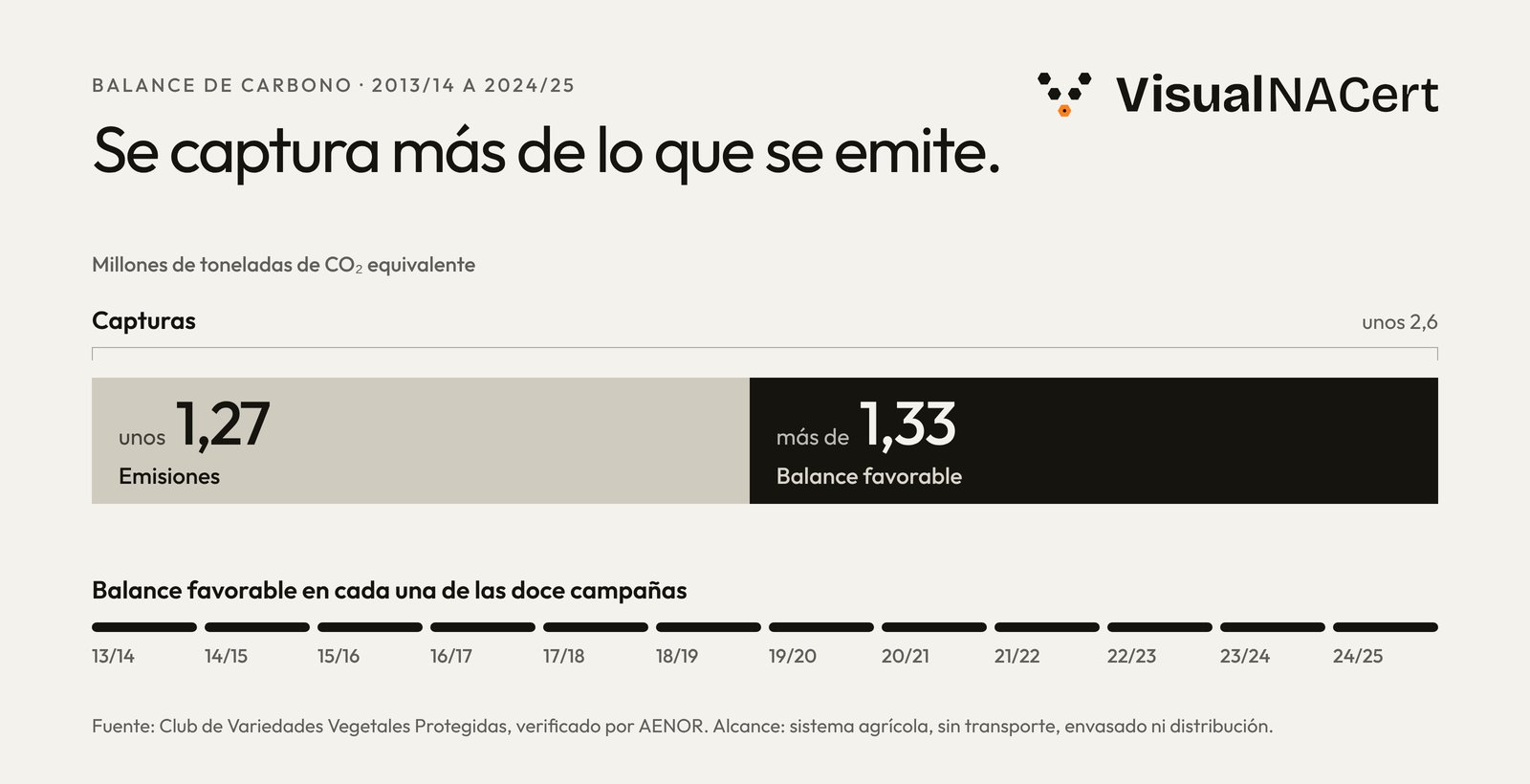
It measures the agricultural system: what happens in the plantation and in cultivation practices. Between the 2013/14 and 2024/25 seasons, and across about 9,000 hectares, the Nadorcott plantations captured about 2.6 million tonnes of CO₂ equivalent and emitted about 1.27 million. The difference, more than 1.33 million, is the favourable balance. And it was favourable in each of the twelve seasons, not just overall.
It does not include transport, packaging or distribution, and the Club does not declare the mandarin carbon neutral. It is a figure limited to one stage of the chain.
From the plantation to the balance
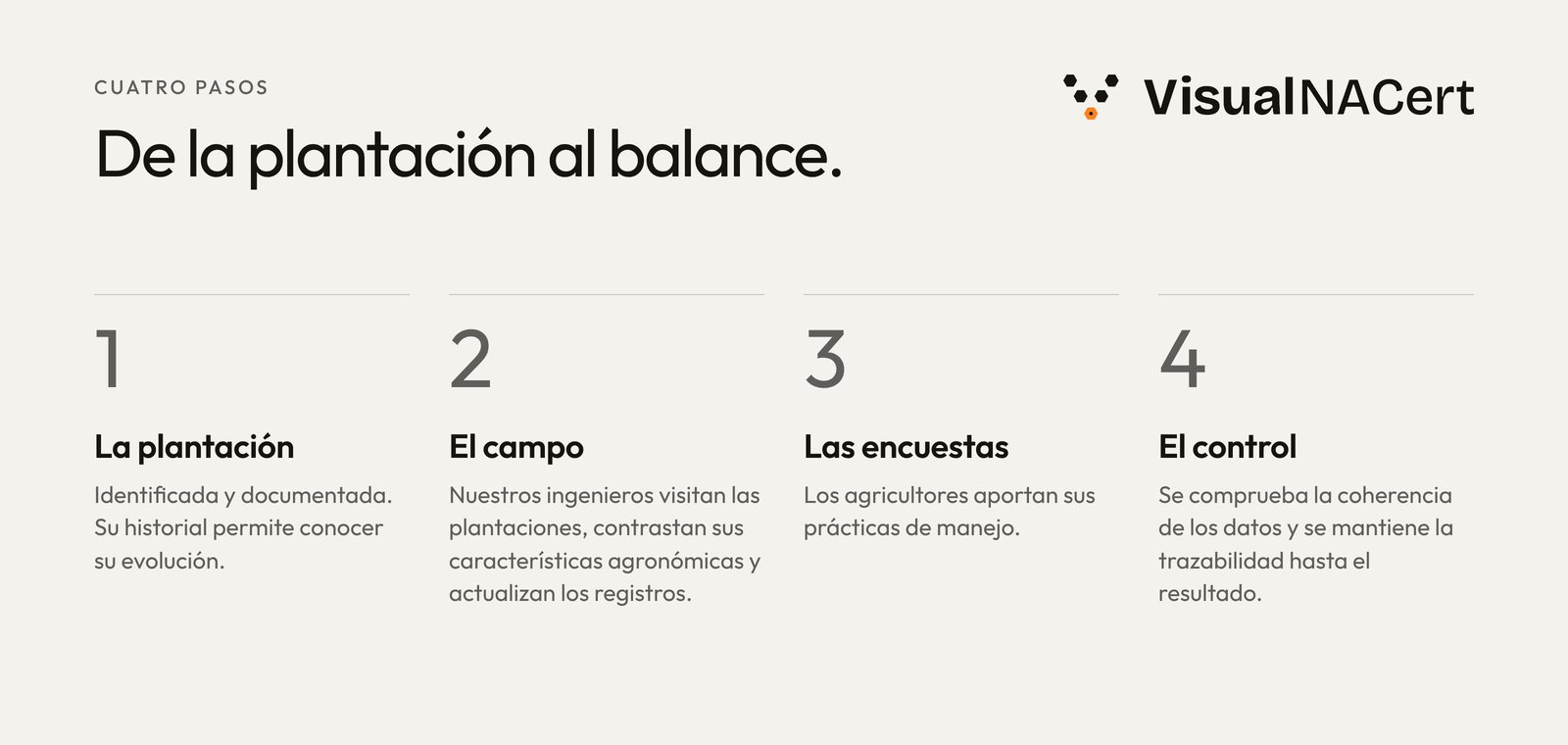
It all starts with a plantation that is identified, traced and documented throughout its whole cycle. From there, the inventory is built in four steps.
- The plantation. It is identified and documented, and its history shows how it has evolved.
- The field. Our engineers visit the plantations, collect and cross-check their agronomic characteristics and update the records.
- The surveys. Growers provide their management practices; in 2024/25, 1,214 growers took part.
- The control. Data consistency is checked and traceability is maintained all the way to the result.
These steps produce concrete data: georeferenced plots, annual field inspections, management records for each season (fertilisation, irrigation, pruning, fuel, electricity and production) and a twelve-year history gathered in a single database.
The role of VisualNACert
VisualNACert takes technical responsibility for the inventory. We designed the data model and the information and calculation system. The calculation starts from IVIA's scientific model and follows the GHG Protocol. All of this makes it possible to link each result to the plantations and the data that support it. AENOR has verified the inventory independently.
A collective effort
Behind every figure there is a grower who has explained how they work. Among the practices they reported in the 2024/25 survey, according to the Club, 87 % use efficient localised irrigation, 80 % maintain ground cover and minimise tillage, 79 % manage pruning residues sustainably and 73 % promote functional biodiversity.
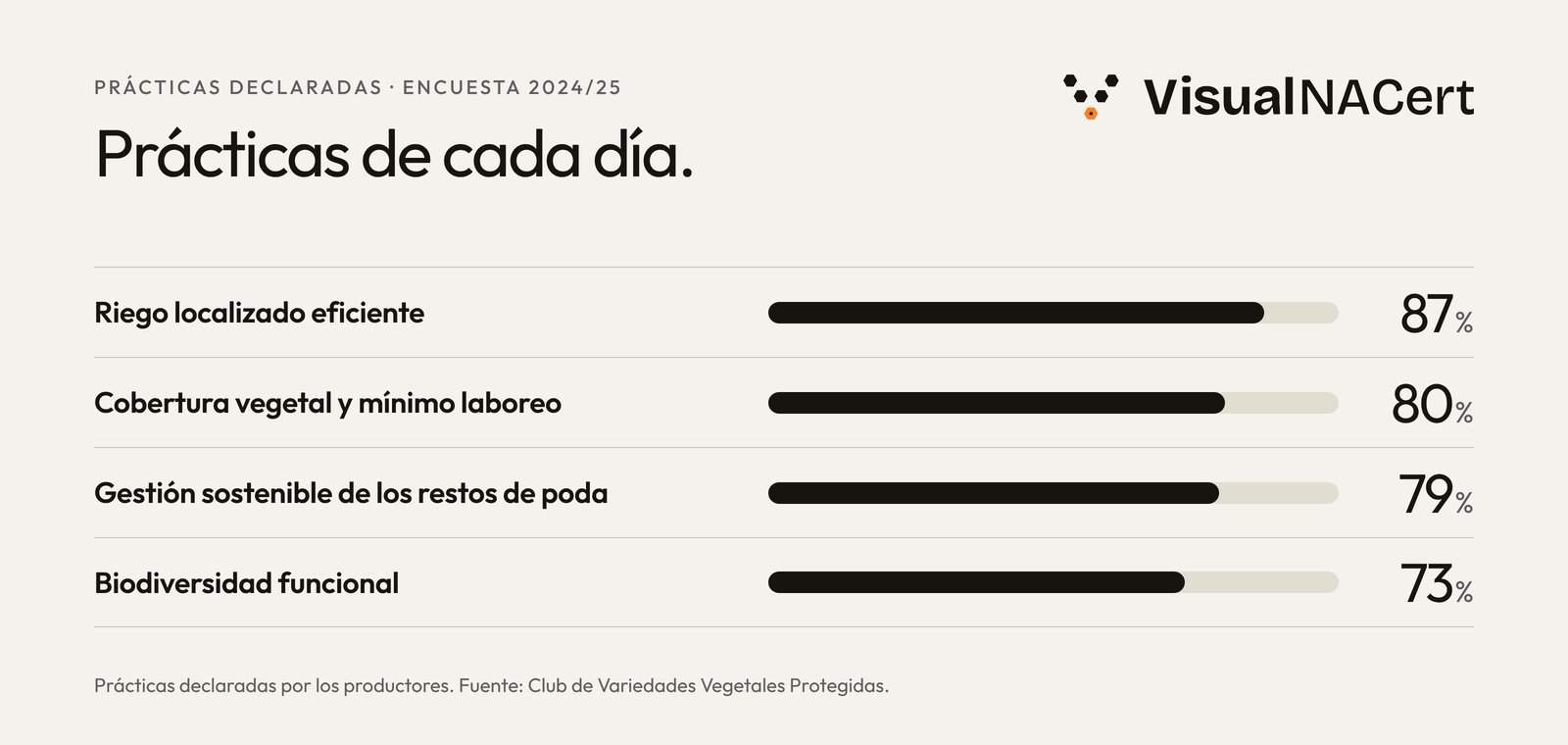
These are everyday practices that the inventory records and that can now be seen. Thank you to everyone who has contributed their data.
What comes next
The balance does not end here. The Club points to nitrogen fertilisation, which is the main source of emissions, soil monitoring and the use of fossil fuels in machinery and energy as areas for improvement. And it will keep measuring every season with the same method and the same verification.
One more argument for the market
Now the market needs to know. Alongside kilos, quality and profitability, the carbon balance is one more argument in the conversation with buyers and consumers.
If you work with field data and want to know how it is done, get in touch. You can also read the interview with Mercedes Iborra, co-founder and strategy director of VisualNACert, in Valencia Fruits.
The figures come from the Club de Variedades Vegetales Protegidas. The scope is the agricultural system, excluding transport, packaging and distribution.
Shall we talk about your case?
Tell us which crop you manage and we will show you how it applies on your farm, using data from your own plots.
Book a demo→