Vegetation indices beyond NDVI: MSAVI
The MSAVI index is used in the early stages of a crop, when the plant is right at the start of its development. It is at this point that the NDVI index has certain limitations in picking up that initial growth.
This happens because the plant is very small, only a few centimetres tall, as can be seen in image 1; or because the plot holds a greater proportion of soil than vegetation, with wide spacing between plants, as seen in image 2, in the southern part of the pivot.
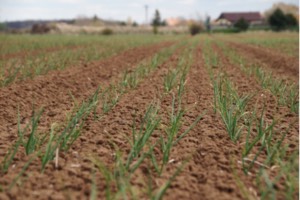
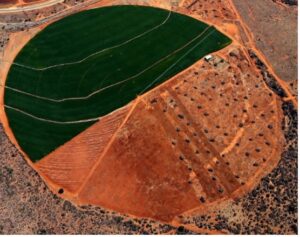
These conditions prevail during the first weeks of development — a period that varies by crop type — until the plant reaches a more advanced stage of growth.
NDVI in the early stage of the crop
In figure 1, the maps show the NDVI index during the early development stage of a horticultural crop. The maps show very low NDVI values, close to 0.1, making it very hard to distinguish the progress of the emerging vegetation across the plot.
Between 23 and 28 March, NDVI is practically 0.1, which for this index represents a greater presence of open soil without vegetation. Three weeks later, around 12 April, open soil can be seen giving way to emerging vegetation, with NDVI values between 0.2 and 0.3.
MSAVI adjusted for horticultural crops
Figure 2 shows the same plot over the same period, applying the MSAVI index adjusted for particular cases such as horticultural crops. Making that adjustment to the value scale allows the level of vigour to be determined in far more detail.
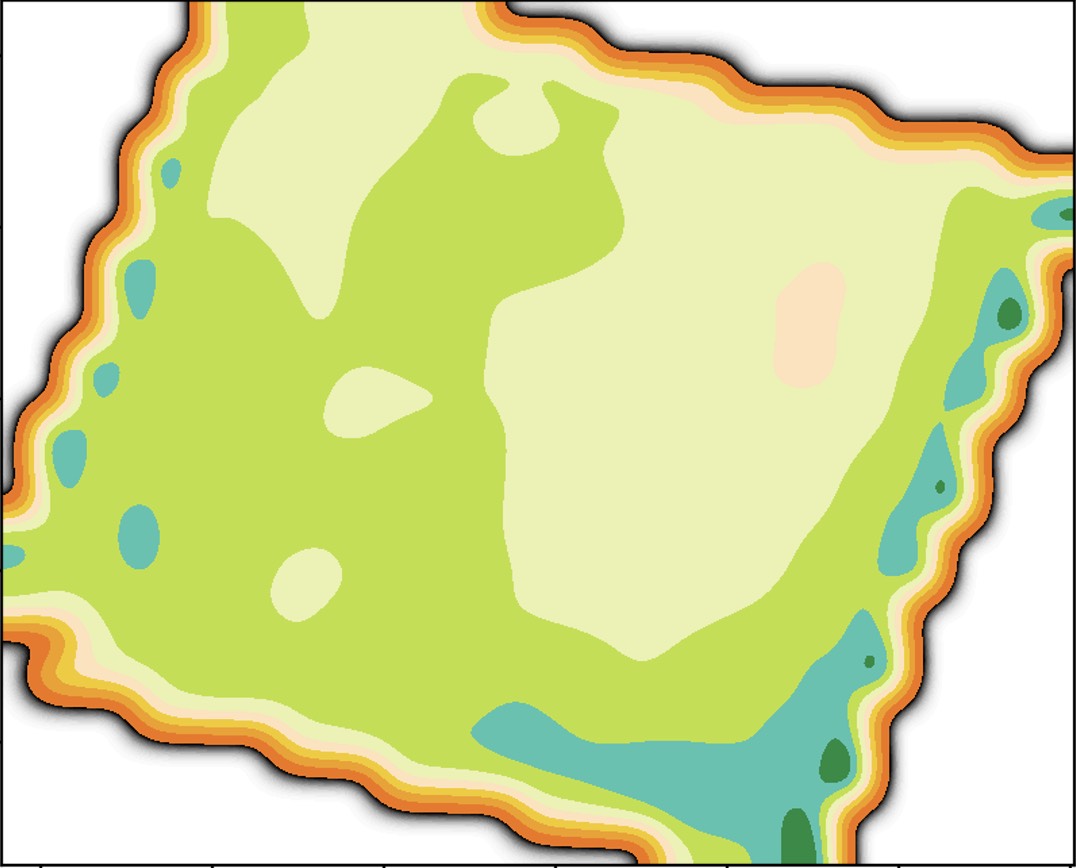
On 23 March, MSAVI shows variability that NDVI cannot perceive, which may be associated with the presence of weeds in the early stage of the crop. That variability levels out around 28 March and rises again around 12 April. At that point, the MSAVI index is able to distinguish levels of vigour across the whole plot.
When it is worth using
In this way, the MSAVI index makes it possible to track the growth and progress of the crop in its early stage, and to detect where intervention is needed if that progress is not what was expected.
Want to put agricultural remote sensing to work with Visual?
Tell us which crop you manage and we will show you how it applies to your case, using data from your own plots.
Book a demo→