100 critical decisions: what DemoAlmendro 2026 made clear about almond orchard profitability

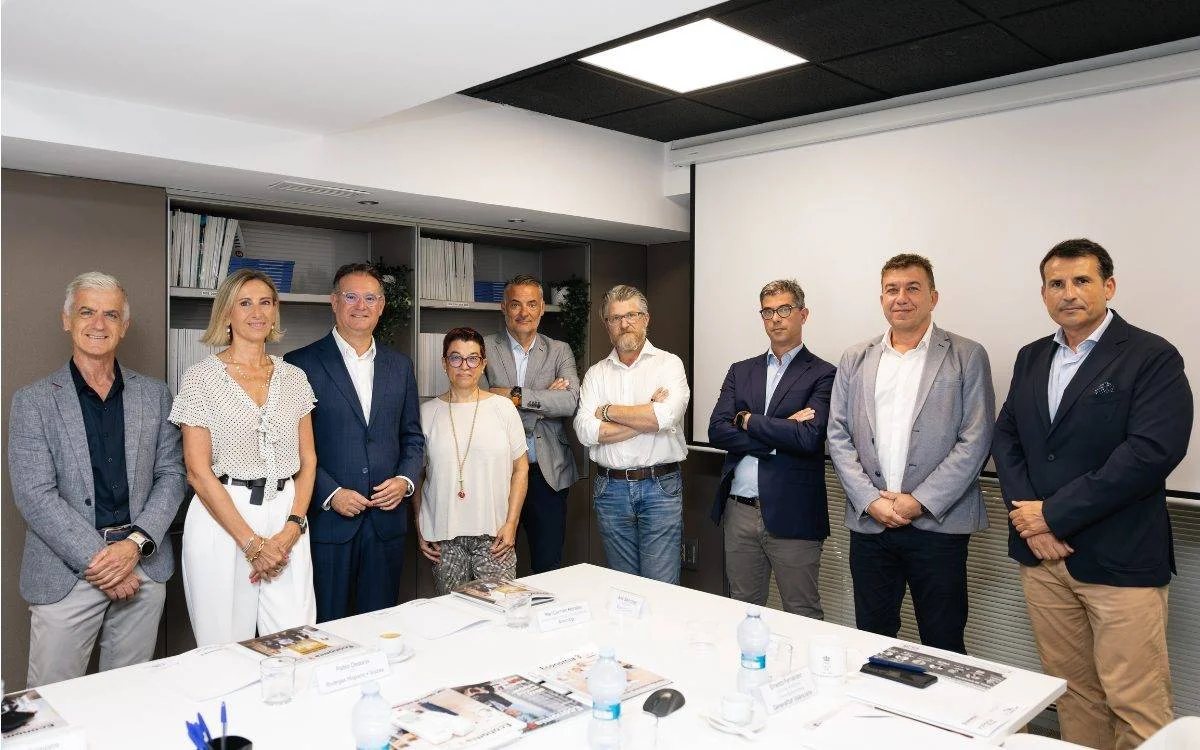
The profitability of an almond orchard is not settled at a single point in the season: it is played out across a hundred small decisions on fertilisation, crop protection and irrigation, taken one by one throughout the year. That was the central message Mercedes Iborra took on 2 June to Finca Terreu (Huesca), where more than 400 industry professionals gathered for the third edition of DemoAlmendro. VisualNACert was there as a sponsor, and Mercedes Iborra joined the panel "Investing in almond: 100 critical decisions for a high-profitability opportunity".
Why almond does not forgive mistakes
Almond is a long-cycle crop, where a management error is not corrected within the same season: it is paid for across several. That turns every input — how much fertiliser, when to irrigate, which crop protection product and at what moment — into a decision with consequences reaching well beyond the current year. In a crop with these characteristics, deciding well from the outset is not good practice, it is the difference between a profitable season and an unprofitable one.
Optimise inputs, do not simply cut them
The message carried at DemoAlmendro was not "spend less", it was "spend better": matching fertilisation to what the soil and the tree genuinely need at each stage, calibrating irrigation to water availability and to the crop's real demand, and anticipating crop protection treatments before the pest or disease has taken hold rather than afterwards. That requires a level of information which visual inspection, on its own, cannot deliver at the scale of a commercial orchard.
Hedgerow planting, a change of model that multiplies decisions
Much of the conversation at DemoAlmendro revolved around hedgerow almond, an intensive planting model gaining ground year after year for bringing orchards into production sooner and allowing mechanised harvesting. But that change of model does not simplify management, it multiplies it: more trees per hectare means more decision points on irrigation and nutrition, and a far narrower margin for error, because management mistakes show up and accumulate faster than in a traditional planting.
What technology contributes when the margin is thin
This is where the part connecting with VisualNACert's daily work comes in: systematically capturing field data — soil moisture, water status, pest pressure — makes it possible to get ahead of problems instead of reacting once they have already cut the harvest. In a crop where the hedgerow model is gaining ground for its ability to intensify production with fewer resources, that anticipation is increasingly what separates an efficient orchard from one that simply produces a lot.
What to look at first if you manage an almond orchard
Of everything shared at DemoAlmendro, there is an order of priority that repeats across orchards already working with data. First, understand the real water status of the soil and the tree before deciding on irrigation, because over-watering penalises as much as under-watering. Second, match fertilisation to the crop's actual phenological stage rather than to a generic calendar. Third, monitor pest pressure often enough to intervene before the damage is visible. That order — water, nutrition, crop health — is, in practice, the same one followed by any almond orchard that wants to protect its margin in a high-cost season.
The role of data in planning the next season
One of the conclusions most repeated in the corridors at DemoAlmendro was that planning the next season starts long before blossom: it starts with analysing the record of the season just gone. Knowing which plots yielded below expectation, and why — a lack of water at a critical moment, a pest spotted too late, fertilisation poorly matched to the phenological stage — makes it possible to correct course before repeating the same mistake another year. In a crop where every mistake is paid for across several seasons, that data-based review is worth as much as any decision taken during the season under way.
This is especially critical on orchards making the transition from the traditional model to hedgerow, where the reference history is still short: the more first-party data accumulated from year one, the sooner management can be tuned to the real particularities of each plot, rather than applying generic recommendations designed for a different planting density.
Another point repeated among those attending DemoAlmendro is that the cost of not having data does not show on this year's invoice, it shows on the next one: a pest treated two weeks late, or irrigation badly calibrated during fruit fill, does not translate into a visible immediate loss but into a yield below expectation at the end of the season, when it is already too late to put right. That is why the anticipation approach — knowing before the problem is visible — weighs so heavily in a crop like almond, where the margin between a profitable season and an unprofitable one can hinge on a single decision taken, or not taken, in time.
An event that confirms where the industry is heading
DemoAlmendro 2026 brought together sponsors such as Agromillora, Rivulis Irrigation, Kenogard and Daymsa alongside trade media including Tierras Digital, and left a shared conclusion: digitalising the almond orchard is no longer an option for the future, it is the tool with which margin is protected today, in a crop with high production costs and cycles that grant no second chances.
Sources
- Interempresas — Tierras Digital — DemoAlmendro 2026: management and technology drive the transformation of the crop (in Spanish)
- DemoAlmendro — Official DemoAlmendro 2026 website and registration
Shall we talk about your case?
Tell us which crop you manage and we will show you how it applies on your farm, using data from your own plots.
Book a demo→