The growing system decides the mill: digitalising the olive grove, debated at the II Iberian Olive Growing Congress
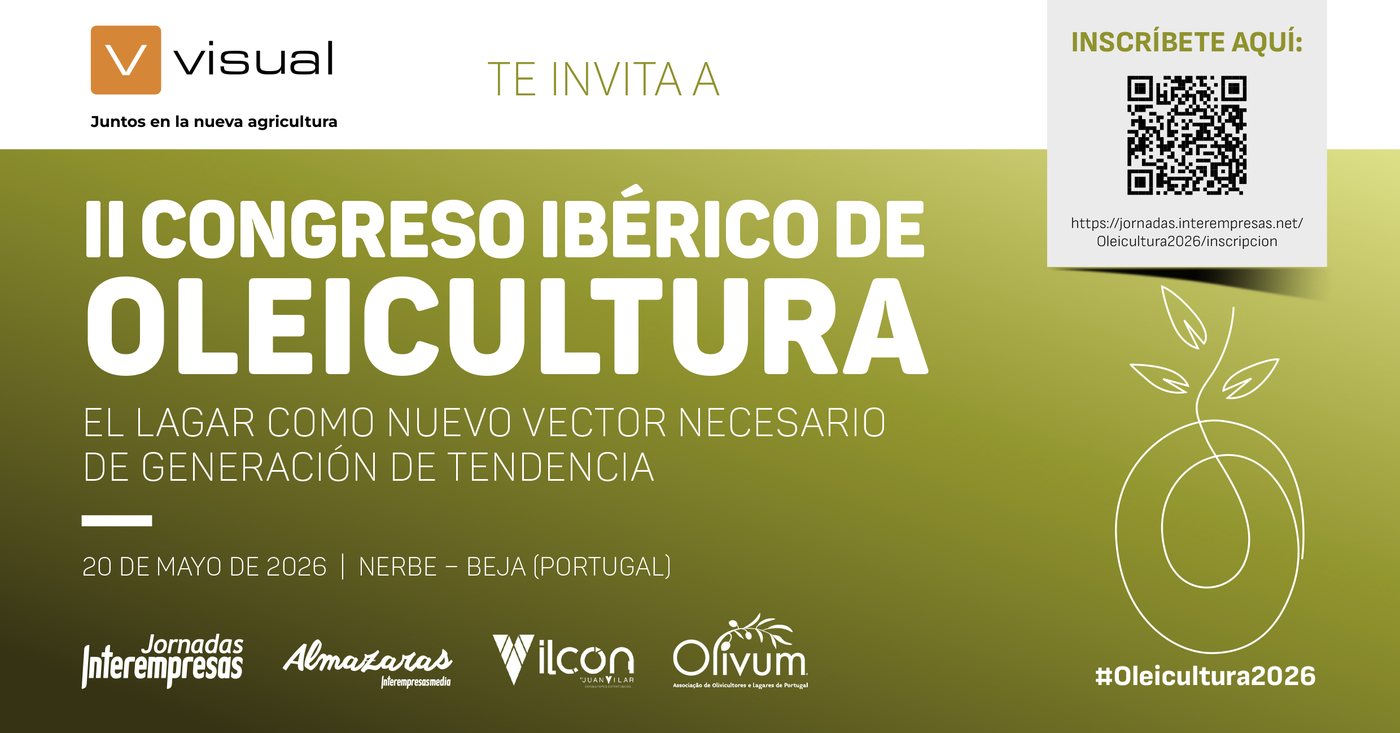
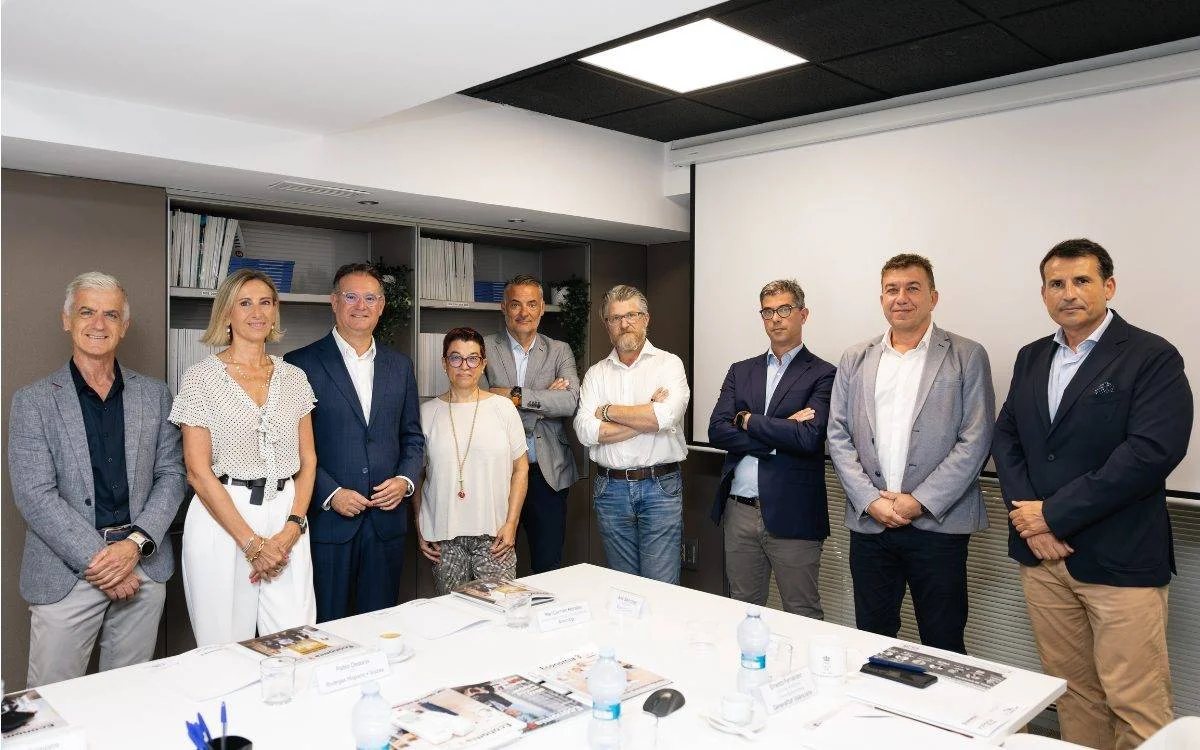
On 20 May, in Beja (Portugal), VisualNACert took part as a sponsor in the II Iberian Olive Growing Congress, in a conversation that at bottom turned on digitalising the olive grove: which field data is needed so that the mill stops being designed blind. Mercedes Iborra Broseta spoke on Round Table 4, "The influence of the growing system: productivity, harvesting, the nature of the fruit, etc. on mill design and scale", chaired by Pedro Martínez (CEO of IMS) and shared with representatives of Olivogestão, ACESUR, Treeconsulting, Todolivo and FOSS Iberia.
A congress that thinks about the olive grove end to end
The II Iberian Olive Growing Congress organised its day into five round tables covering the whole value chain: mill design as a centre of income generation, adding value to by-products such as alperujo or stones, training the human team a increasingly technical mill demands, the influence of the growing system on industrial design — where Mercedes Iborra spoke — and, finally, how rising oil production conditions its commercialisation. Seen together they leave a clear message: no isolated decision in the grove or the mill holds up without being connected to the rest of the system.
Traditional, intensive or hedgerow: the growing system is no longer a neutral detail
The starting point of Round Table 4 was direct: the growing system — traditional, intensive or hedgerow — is no minor agronomic detail, it is the variable determining productivity, the timing and method of harvest, and the very nature of the fruit arriving at the mill. A hedgerow grove does not merely produce a different volume from a traditional one: it produces a different olive, mechanically harvested and within a far narrower time window, which completely changes the rhythm at which the mill has to operate through the season.
Why this forces a rethink of the mill
If the fruit coming through the hopper changes according to the growing system, the mill cannot be designed as a piece isolated from the field. Its sizing, its intake logistics and its capacity to absorb harvest peaks depend directly on which growing systems feed that mill, and in what proportion. Designing a mill without that starting information means designing it for a farm that, in practice, no longer exists: most now live with traditional, intensive and hedgerow plots at the same time, each with its own intake calendar.
From agronomic variable to industrial decision
This is where the message connects with VisualNACert's daily work: knowing in advance which growing system, which ripeness stage and what volume of fruit is on its way makes it possible to plan the mill's capacity and logistics instead of reacting once the harvest is already at the door. It is the same principle we apply in the field to fertilisation or irrigation, moved now to the point where the grove and the industry meet: the more upstream agronomic data the mill has, the better it can plan its own operation.
What growers and mills can already do with this
The panel's practical conclusion was simple to state, though it takes data discipline to apply: record systematically which growing system each plot uses, with which harvest calendar and what yield history, and share that information with whoever runs the mill before the season starts rather than during it. This is exactly the kind of agronomic data a farm or a cooperative already generates every year, and which, with the right tools, stops disappearing into scattered field notebooks and becomes an industrial planning decision.
Why this matters for the Spanish olive oil industry
Spain and Portugal do not compete on production volume alone: they compete on the ability to anticipate how the fruit arriving at the mill changes, and to size up accordingly. That is the conversation congresses like this one put on the table, and sector by sector it is also the same pattern we are seeing in almond, citrus or stone fruit: profitability is no longer settled at a single point in the chain, it is settled in the connection between the field and what comes next.
What the other four panels make clear
Although Mercedes Iborra spoke on Round Table 4, the rest of the programme reinforces the same idea from different angles. Table 1, on mill design as a centre of income generation, and Table 2, on adding value to by-products such as alperujo, agree that a mill's profitability no longer depends solely on how much oil it produces, but on how it manages every resource entering and leaving it. Table 3, focused on training the human team, added a piece rarely discussed in technological terms: a more digitalised mill demands people able to interpret that data, not only to operate the machinery.
And Table 5, on commercialisation, closed the circle: producing more efficiently counts for little if the resulting oil cannot then be positioned in a market growing ever more demanding about traceability and origin. Taken as a whole, the day sketches an industry that no longer separates field, processing and market into distinct compartments, but is beginning to treat them as what they are: parts of a single decision system.
All of this carries a market reading that goes beyond the congress itself: buyers and end consumers increasingly demand traceability on how the oil reaching their table was produced, and that traceability begins precisely with the crop data determining what kind of fruit enters each mill. An industry able to document that chain, from growing system through to the mill, does not only produce with better judgement: it is also better prepared to answer that growing demand for verifiable origin and process.
Sources
Shall we talk about your case?
Tell us which crop you manage and we will show you how it applies on your farm, using data from your own plots.
Book a demo→